

Choosing the right firewood — and burning it well — comes down to one thing above all: how dry it is. This short guide explains the difference between kiln dried and seasoned logs, what “Ready to Burn” means, and how to season and store firewood at home.
Kiln dried vs seasoned logs: what’s the difference?
Both start as the same freshly cut (“green”) hardwood, which can be over 50% water. The difference is how that moisture is removed.
- Seasoned logs are air-dried outdoors over many months — typically a year or more — until the moisture falls. Because drying depends on the weather, quality can vary.
- Kiln dried logs are dried in a kiln to a consistent, reliable moisture content, usually around 15%. They are ready to burn straight away and light more easily.
Our kiln dried logs are dried to approximately 15% moisture. Our part-seasoned logs are sold deliberately less dry, for you to finish seasoning at home and save money.
What does “Ready to Burn” mean?
Since 2021 it has been illegal in England to sell wood for domestic burning in volumes under 2 cubic metres unless it is certified Ready to Burn — meaning a moisture content of 20% or below. The certification, backed by Woodsure, tells you the wood will burn cleanly and efficiently. All of our kiln dried firewood is Ready to Burn.
Wet wood, above 20% moisture, produces more smoke and harmful pollutants, gives off less heat, and leaves tar and soot that can damage your stove and chimney.
How to season firewood at home
If you buy our part-seasoned logs to finish drying yourself:
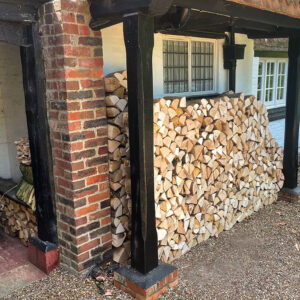
- Stack the logs off the ground, ideally on pallets, in a sunny and breezy spot.
- Cover the top to keep rain off, but leave the sides open so air can flow through.
- Split logs dry faster than whole ones, and smaller logs faster than large.
- Check with a moisture meter before burning — you are aiming for 20% or below.
How to store firewood
Even fully dry, Ready to Burn logs will draw moisture back in if stored badly. Keep them under cover, off the ground, with air circulating — never sealed under a tarpaulin, which traps damp in.
How much firewood do I need?
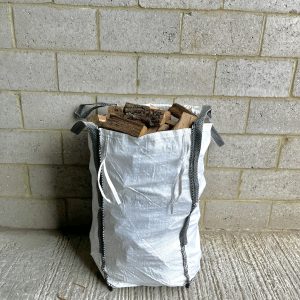
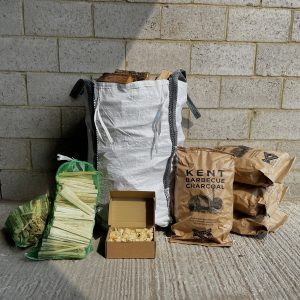
It depends on your appliance and how often you burn, but as a rough guide a regular wood-burning stove user will get through several cubic metres over a winter. Our bulk bags are an economical way to stock up; nets and barrow bags suit lighter or occasional use.